<이슈 분석>The Significance and Future Outlook of the U.S. FDA’s New Initiative: ‘TEMPO (Technology-Enabled Meaningful Patient Outcomes) for Digital Health Devices Pilot’
*AI’s help in researching data for this article and writing some sentences has had a great effect.
1. Key summary of the TEMPO initiative
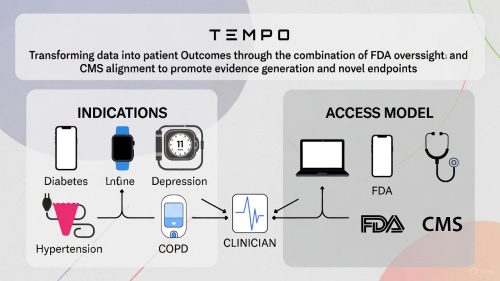
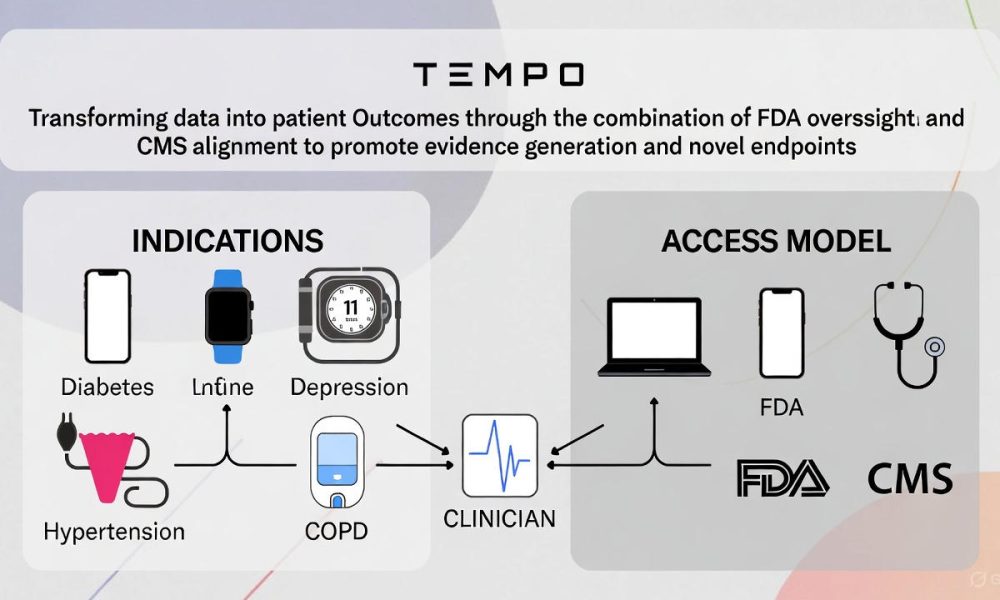
On December 5, 2025, the U.S. Food and Drug Administration (FDA) announced the Technology-Enabled Meaningful Patient Outcomes (TEMPO) for Digital Health Devices Pilot, a new voluntary program developed by the Center for Devices and Radiological Health (CDRH). TEMPO is designed to expand patient access to digital health technologies for chronic diseases while maintaining safeguards through real-world data (RWD) collection and oversight.U.S. Food and Drug Administration+1
TEMPO is tightly linked to the CMS Innovation Center’s ACCESS (Advancing Chronic Care with Effective, Scalable Solutions) model, a new payment initiative that ties recurring payments for managing chronic conditions to measurable outcomes. Within this joint framework:CMS+1
Scope of devices Digital health devices (including AI-enabled tools and software-based solutions) that meet the statutory device definition and are used under clinician supervision in the outpatient setting.
Clinical focus areas (four domains)
Early cardio-kidney-metabolic: hypertension, dyslipidemia, obesity/overweight with central obesity, prediabetes
Regulatory innovation Participating manufacturers may request that FDA exercise enforcement discretion for certain requirements (e.g., premarket authorization, IDE, parts 50/56) so that devices can be used in care covered by ACCESS before full marketing authorization, provided there is a robust plan to manage risk and collect RWD.Federal Register+1
Participation and timelines
Statements of interest accepted from January 2, 2026.
FDA expects to select up to about 10 U.S.-based manufacturers per clinical area (total up to ~40), aiming for diversity of size, maturity, and product types.Federal Register+1
Follow-up information requests are expected around March 2, 2026 for shortlisted participants.
In essence, TEMPO creates a controlled “regulatory sandbox” embedded in a value-based payment model, in which companies can deploy not-yet-fully-authorized digital health tools under close oversight, generate RWD, and then use those data to support future marketing applications.Holland & Knight+1
2. Implications of TEMPO
2.a. Implications for FDA regulatory policy
1) RWD/RWE as a central regulatory asset, not an add-on
TEMPO moves RWD/RWE from a secondary role to a primary engine of regulatory evidence. The pilot explicitly expects participants to:Federal Register+1
Collect RWD on device use and outcomes in everyday clinical practice under ACCESS.
Share those data with FDA throughout the pilot.
Ultimately submit a marketing application (e.g., 510(k), De Novo) supported by RWD generated under TEMPO, supplemented by other data as needed.
This operationalizes years of policy rhetoric around RWD/RWE in devices into a concrete program that ties real-world performance to enforcement discretion and future market access.
2) A structured model of “enforcement discretion against obligations”
Historically, “enforcement discretion” has often been ad hoc or narrow. TEMPO formalizes a quid pro quo:
FDA may temporarily not enforce some requirements (premarket authorization, IDE, certain clinical study rules).
In exchange, the manufacturer must implement:
Strong risk-mitigation and patient-safety plans,
RWD collection/monitoring/reporting plans,
Timelines and plans for submitting a full marketing application.Federal Register+1
This reframes enforcement discretion as a contract-like regulatory instrument, with explicit conditions, milestones, and termination possibilities.
3) Integration of regulatory oversight with payment reform
By embedding TEMPO into the ACCESS payment model, FDA is implicitly acknowledging that how care is paid for influences how technology is used and evaluated. ACCESS pays providers with outcome-aligned recurring payments, and TEMPO piggybacks on this to:CMS+1
Ensure devices are deployed in organizations already incentivized to track outcomes.
Use the ACCESS infrastructure (data, reporting, quality safeguards) to support RWD generation.
This is a significant cross-agency convergence of regulation and reimbursement, and a notable departure from siloed, pathway-specific oversight.
4) A successor to, not a repeat of, Pre-Cert
The Digital Health Software Pre-Certification Pilot explored firm-level assurances but struggled with scalability and statutory constraints. TEMPO shifts emphasis from company-level pre-certification to context-specific enforcement discretion within a defined payment and care model:U.S. Food and Drug Administration+1
It leverages an existing statutory device framework.
It uses the TAP program’s life-cycle advisory and “sprint” discussions to maintain early, iterative engagement.
It positions “home as a health care hub” and chronic disease management as primary test beds, rather than generic SaMD.
If successful, TEMPO could become the template for future “reg outcomes sandboxes” in other therapeutic domains.
2.b. Implications for the industry and related companies
1) Earlier, controlled market entry for digital tools
Deploy products in real clinical workflows under ACCESS before full authorization,
Demonstrate pragmatic effectiveness and safety under supervision,
Build a data package in parallel with revenue-generating care.
This is attractive for companies with:
Mature prototypes and preliminary evidence,
But not enough data yet for a traditional 510(k) or De Novo.
2) Data and quality infrastructure become competitive differentiators
Entry into TEMPO is not simply about having a novel app or algorithm. FDA’s Federal Register notice signals specific expectations: device description, safety/benefit rationale, quality management system (QMS), detailed RWD plans, performance goals, and timelines.Federal Register+1
Companies strong in:
QMS and regulatory operations,
Data engineering and analytics for RWD,
Governance of patient consent, privacy, and security,
will be better positioned to win slots in the pilot and to convert participation into eventual authorization.
3) Strategic positioning within four high-value clinical domains
The four TEMPO domains map to huge U.S. markets:
Cardiometabolic and kidney disease (GLP-1 era, CKD/heart failure, etc.)
Behavioral health (depression, anxiety, virtual therapy, CBT apps)
Digital health developers in these spaces can treat TEMPO as:
A signal to focus on outcomes that CMS is willing to pay for,
A path to embed solutions in ACCESS participants rather than selling directly app-by-app.
4) Consolidation and partnership dynamics
TEMPO will likely accelerate:
Partnerships between device/software startups and ACCESS-participating provider organizations.
M&A by larger medtech and health-IT players who want to bring TEMPO-ready portfolios in-house.members.medicaldevices.org+1
For many companies, the realistic strategy may be co-developing or white-labeling their technology to ACCESS participants who have the care delivery and data infrastructure required.
2.c. Implications for public health
1) Potential for improved chronic disease control at scale
If TEMPO works as intended, the public-health upside is substantial:
More patients with diabetes, CKD, ASCVD, depression, anxiety, and chronic pain could access technology-enabled, integrated care that tracks and adjusts treatment between visits.CMS+1
Devices used in TEMPO will be explicitly outcome-oriented, aligning with ACCESS’s payment logic and focusing on measurable improvements rather than just engagement metrics.
2) A more responsive, evidence-generating care system
RWD generated under TEMPO can:
Reveal which patients, under which conditions, benefit most from specific digital tools.
Support adaptive learning health systems, where treatment and product design co-evolve.
This shifts digital health from a “download an app and hope” model toward continuous, data-driven public health surveillance and optimization.
3) Equity, access, and risk of digital divides
There are clear risks:
ACCESS participants may be large, better-resourced systems; smaller or rural providers may be under-represented.
Devices may require smartphones, connectivity, or digital literacy, potentially leaving behind marginalized groups.
CMS’s requirement for enhanced consent and attention to quality and safety under ACCESS is a safeguard, but it will be critical to monitor: who is actually enrolled, whose outcomes improve, and whether gaps widen or narrow across socioeconomic and racial lines.CMS
4) New transparency around outcomes
ACCESS will publish risk-adjusted outcomes for participating organizations, and TEMPO devices are embedded in that ecosystem.Federal Register+1
In the long run, this could:
Make digital health performance more visible to the public,
Put pressure on vendors whose tools do not show meaningful benefit,
Encourage a culture where public-health metrics drive product iteration.
3. Anticipated future developments
Looking forward, several trajectories are likely.
1) Expansion beyond the initial four clinical domains
If TEMPO proves workable, FDA and CMS could:
Extend similar pilots to oncology survivorship, COPD/asthma, heart failure, or neurodegenerative diseases, where home-based monitoring is critical.
Use the TEMPO model as a “template” for new ACCESS-like models in other high-burden conditions.
2) Formal guidance and possible codification
Depending on outcomes, TEMPO could lead to:
CDRH guidance documents outlining when and how enforcement discretion tied to RWD can be used for digital health devices.
Eventually, legislative proposals to refine statutory authorities for digital health and RWD-based evaluations, especially if the program surfaces gaps in current law.
3) Stronger international ripple effects
Other jurisdictions (EU, UK, Canada, Singapore, Korea) are already exploring RWD in device regulation. TEMPO could:U.S. Food and Drug Administration
Serve as a reference model for pilots that link reimbursement reforms with digital device regulatory sandboxes.
Drive efforts via IMDRF or other fora to harmonize RWD/RWE frameworks for SaMD and digital tools.
4) Integration with AI-specific policy
Given that many TEMPO-eligible devices will be AI-enabled, expect:
Closer alignment with broader FDA AI/ML frameworks and post-market learning approaches.
Possible AI-specific variants of TEMPO that experiment with continuous learning systems, subject to updated change-management policies.
5) Evolution of “Home as a Health Care Hub”
TEMPO is explicitly framed as part of the Home as a Health Care Hub initiative. Over time, we can anticipate:U.S. Food and Drug Administration
More formal recognition of home-based device ecosystems (remote monitoring, wearables, sensors) with integrated regulatory expectations.
A re-balancing of oversight between facility-based devices and home-based DHTs.
4. Expected response strategies from the U.S. medical industry
The TEMPO-ACCESS bundle is likely to provoke differentiated responses across stakeholders.
4.1 Provider organizations (health systems, IDNs, large group practices)
Build “TEMPO-ready” digital care pathways
Identify chronic disease care lines (e.g., diabetes, CKD, depression) where digital tools can be integrated into ACCESS participation.
Standardize workflows for device onboarding, remote monitoring, and escalation.
Invest in data infrastructure and governance
Strengthen capabilities to integrate device data into EHRs, normalize and analyze outcomes, and report to both CMS and FDA-linked partners.
Enhance consent processes, with special attention to enhanced consent requirements for TEMPO device users under ACCESS.CMS
Form strategic alliances with device manufacturers
Co-design pilot projects with manufacturers applying to TEMPO, ensuring alignment on outcomes and risk-mitigation.
Negotiate data-sharing and IP terms up front.
4.2 Payers and health plans
Align benefit designs with ACCESS/TEMPO devices
For Medicare Advantage and commercial plans, incorporate successful TEMPO devices into digital formularies or preferred technology lists.
Tie reimbursement to documented outcome improvements.
Monitor cost-effectiveness and scaling potential
Evaluate whether TEMPO-involved tools can be scaled beyond ACCESS participants, and under what conditions they generate ROI.
Companies with broad portfolios may prioritize products in cardiometabolic, musculoskeletal, and behavioral health to access the pilot and its RWD advantages.
Strengthen regulatory and RWD competencies
Build internal teams (or contract partners) specializing in:
FDA device submissions,
GCP/QMS for software and connected devices,
RWD/RWE study design and analysis.
Design outcome-focused products rather than feature-heavy apps
Because ACCESS payments are explicitly outcome-aligned, products that show clear, measurable improvements in blood pressure, HbA1c, pain scores, PHQ-9/GAD-7 scores, etc. will be favored.CMS+1
5. How Korean companies should prepare and respond
For Korean digital health and medtech companies, TEMPO is both a signal and an opportunity. It sets the direction of U.S. policy for the next wave of chronic disease technology.
5.1 Clarify a U.S. market strategy anchored in TEMPO domains
Prioritize products in TEMPO’s four clinical areas:
Evaluate whether existing Korean solutions (e.g., remote glucose monitoring, hypertension coaching apps, musculoskeletal rehab platforms, CBT-based mental health apps) can be adapted to U.S. clinical guidelines and measurement frameworks.
5.2 Establish a “U.S.-ready” presence and regulatory posture
U.S. base
TEMPO limits participation to U.S.-based manufacturers, primarily for oversight and inspection reasons.Federal Register
Korean firms serious about TEMPO should consider:
U.S. subsidiaries,
Joint ventures with U.S. device makers,
Licensing core technology to U.S. partners who will act as the manufacturer of record.
Regulatory alignment
Map existing Korean MFDS approvals (if any) to the FDA device categories and risk classes.
Build the QMS, cybersecurity, and SaMD documentation needed to satisfy FDA expectations even in an enforcement-discretion context.
5.3 Invest early in RWD and outcome-measurement capabilities
To be attractive for TEMPO:
Design products with built-in outcome measures:
e.g., automatic capture of blood pressure logs, step counts, PROs like PHQ-9, pain VAS scores, etc.
Build or partner for:
Data pipelines from device → app → cloud → EHR,
Analytics that can generate regulator-grade RWD reports (e.g., pre-specified endpoints, handling of missing data, subgroup analyses).
Korean companies with strong engineering but weaker clinical trial/RWE experience should seriously consider alliances with CROs or U.S. academic partners that can help design RWD collection under TEMPO.
5.4 Partner with ACCESS participants rather than going alone
Because devices in TEMPO must be used within ACCESS model participants, a direct-to-consumer or small-clinic strategy will not suffice.CMS+1
Recommended approach:
Identify large U.S. integrated delivery networks (IDNs), academic health systems, or multi-state group practices that plan to join ACCESS.
Offer co-development projects where the Korean technology is localized and integrated into their chronic care pathways.
Share RWD and IP so both parties benefit (the provider on payment/quality metrics, the company on regulatory progression).
5.5 Use TEMPO as a strategic “North Star” for Korean policy and MFDS engagement
At the policy level, Korean firms and industry associations could:
Brief MFDS and Korean payers on TEMPO and ACCESS as reference models for:
RWD-based evaluation of digital chronic disease tools,
Limited, structured enforcement discretion to enable real-world pilots,
Linking reimbursement to outcomes rather than simple coding.
Advocate for Korean analogues: localized digital-health sandboxes in diabetes, hypertension, mental health, and MSK care, where RWD is collected in the NHIS/HIRA ecosystem.
Such alignment could make Korean products more TEMPO-compatible from the outset and ease bilateral recognition or data-sharing discussions in the future.
Closing thought
TEMPO is not just another digital health pilot; it is effectively a prototype of a new regulatory–reimbursement architecture for chronic disease technologies in the United States. For regulators, it tests whether enforcement discretion plus RWD can safely accelerate innovation. For companies, it foregrounds outcomes, data systems, and partnerships over “apps on an app store.” For Korean firms looking at the U.S. market, it offers a clear signal: build for real-world outcomes, design for integrated care, and be ready to live in a world where regulatory approval and payment both depend on what your product actually changes in patients’ lives.
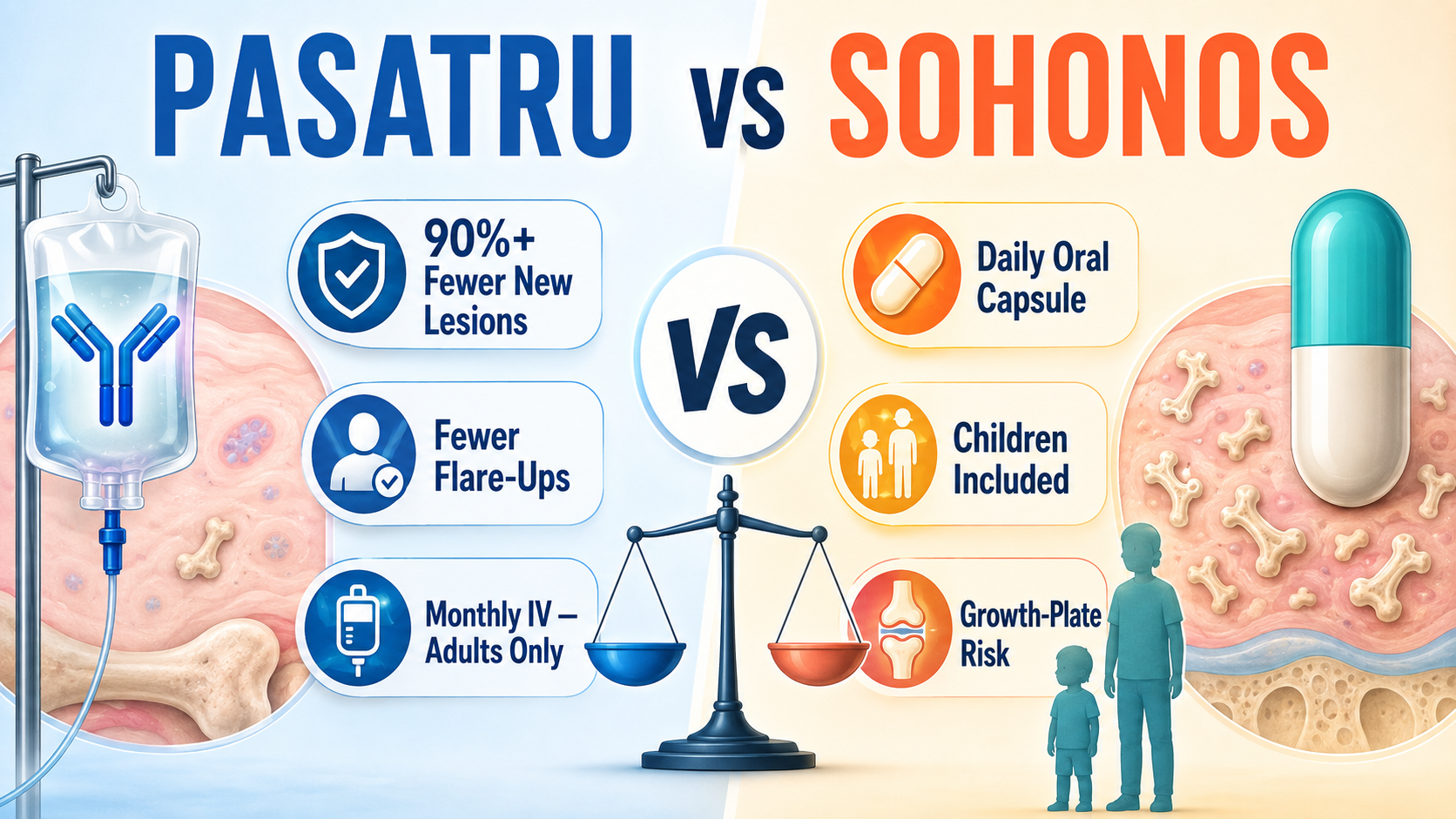
근육·힘줄·인대 같은 부드러운 조직에 뼈가 생기는 매우 희귀한 유전 질환이 있습니다. 한번 생긴 뼈는 관절과 주변 조직을 굳게 만들어 환자의 움직임을 점차 제한하고 나중에는 생명을 위협합니다. 워낙 희귀한 증상이라서 치료 약이 3년 전에 한 번 나왔는데, FDA가 8월 19일 그 두 번째 약을 승인했습니다.
#희귀질환 #골화 #단백질 #입센 #리제네론
https://fdajournal.com/treatment-for-a-rare-genetic-disorder-in-which-bone-forms-in-the-muscles-regeneron-pasatru-ipsen-sohonos-a-two-way-battle-is-imminent-260824/
웹사이트: https://fdajournal.com (FDA JOURNAL)
*Dae Ho PARK, ceo@fdajournal.com, 82(Korea)-10-5797-3580
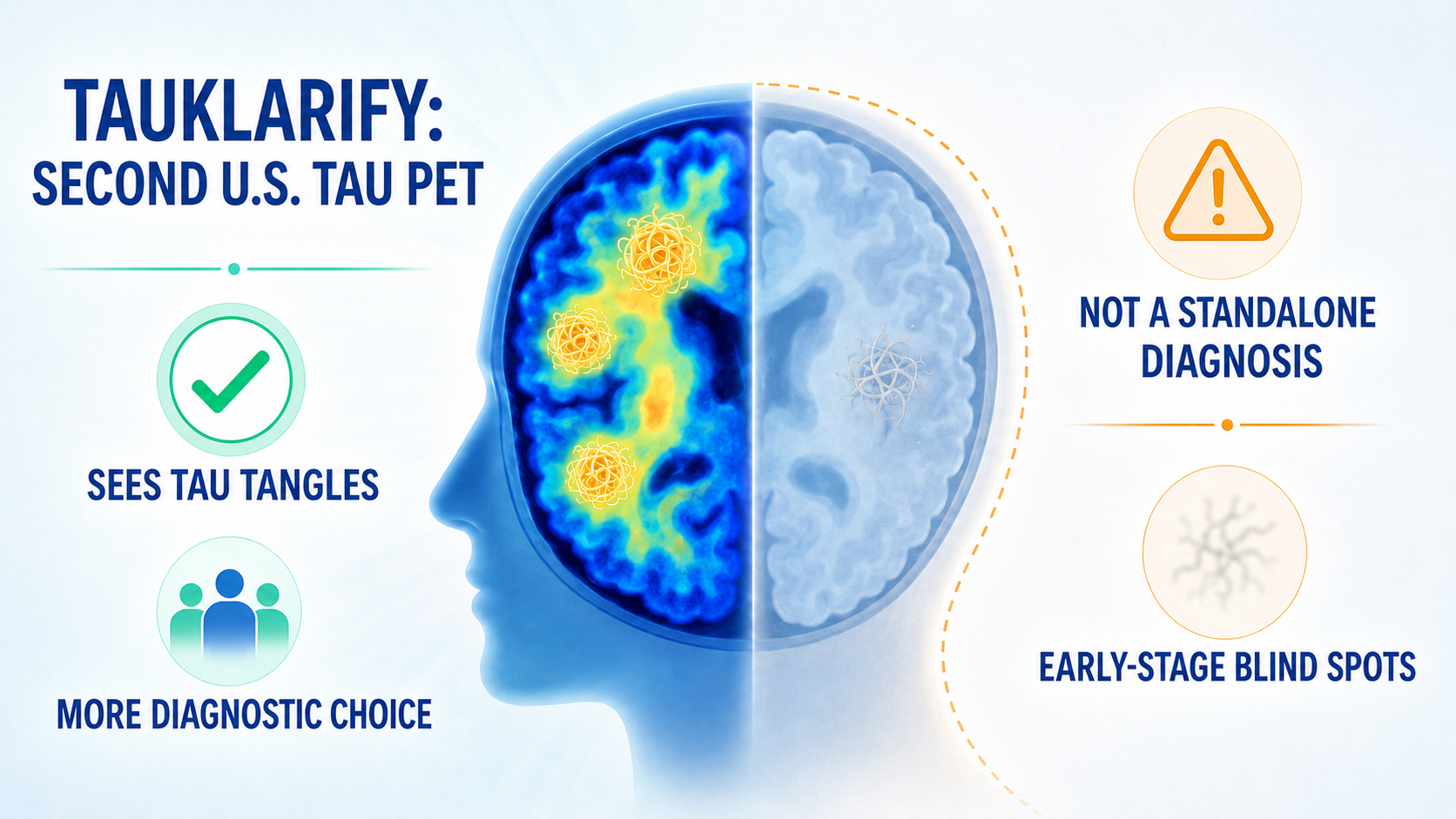
알츠하이머병 환자의 뇌에서는 두 종류의 단백질이 비정상적으로 바뀝니다. 하나는 뇌 세포 바깥에 쌓이는 아밀로이드(amyloid)이고, 다른 하나는 뇌 세포 안에서 비정상적으로 엉키는 타우(tau)입니다. 정상적인 타우 단백질은 뇌 세포 안의 구조를 안정적으로 유지하는 역할을 해야 하는데, 알츠하이머가 들어오면 이 단백질이 뒤엉켜 버립니다. 이 '엉킨 타우'을 찾아내는, 일종의 수색대가 FDA의 승인을 받았습니다. 시장에 나오려면 시간이 좀 걸릴 듯합니다. #알츠하이머 #치매 #타우 #단백질 #타우단백질 #치매진단
https://fdajournal.com/alzheimer-tau-protein-tangles-lantheus-tauklarify-pet-a-second-tau-pet-tracer-not-a-treatment-260824/
웹사이트: https://fdajournal.com (FDA JOURNAL)
*Dae Ho PARK, ceo@fdajournal.com, 82(Korea)-10-5797-3580
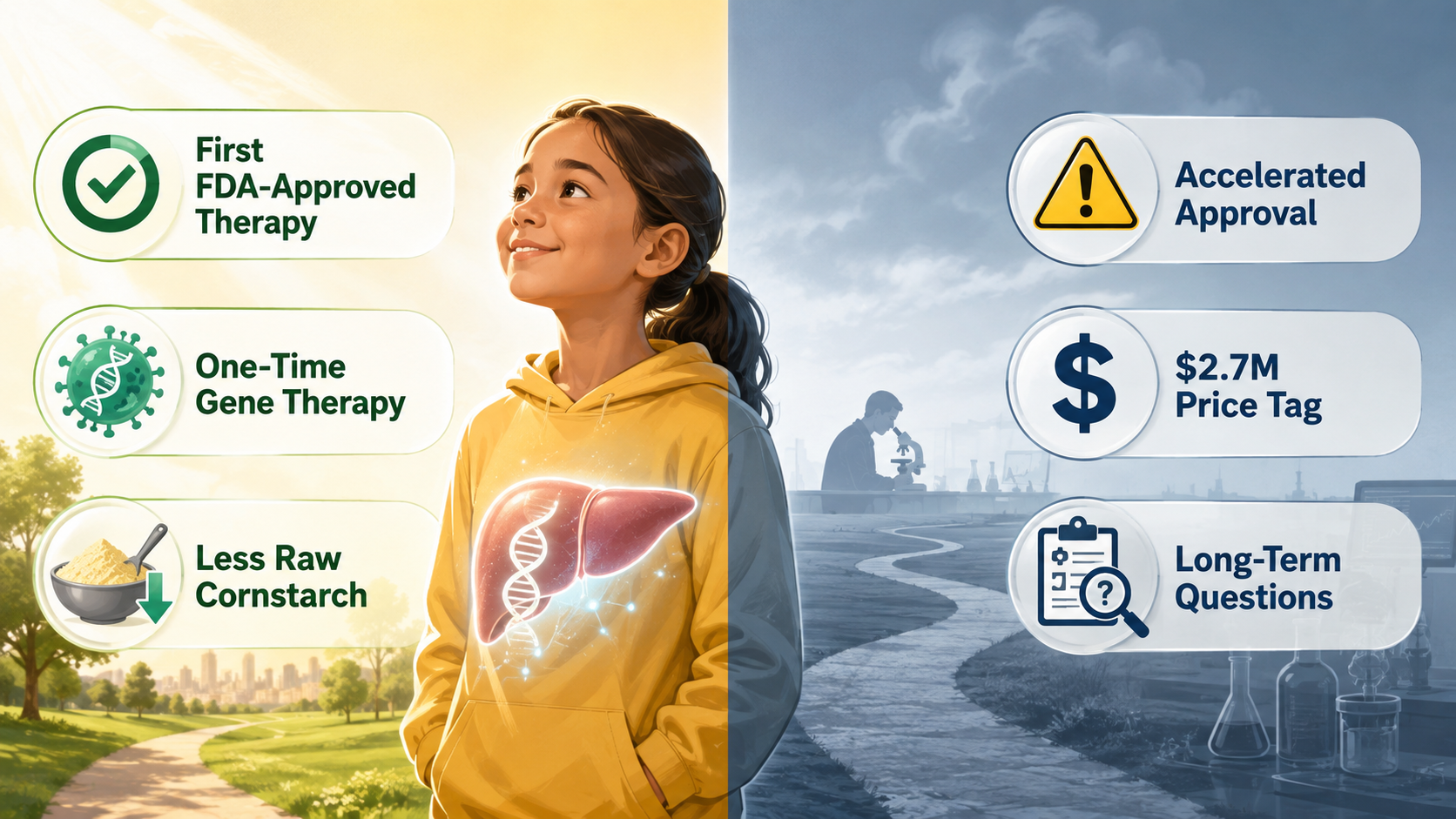
몸속에 저장해 놓은 글리코겐을 필요할 때 포도당으로 꺼내 쓰는 과정에 문제가 생기는 유전 질환이 글리코겐 저장병입니다. 쉽게 말해, 간에 에너지를 저장해 놓고도 필요할 때 혈액 속으로 당을 제대로 내보내지 못하는 것입니다. 초희귀질환입니다. 이 환자들은 지금까지는 옥수수 전분을 계속 먹어야 했습니다. 이번에 FDA가 주사 한 방에 해결하는 약을 승인했습니다. 그런데, 남은 과제도 많지만, 특히 약값은 일반인과 너무 거리가 멉니다. #저혈당 #혈당 #글리코겐 #옥수수 #전분 #유전자 #유전자치료제
https://fdajournal.com/glycogen-storage-disease-raw-cornstarch-ultragenyx-genglycos-4-7m-260823/
웹사이트: https://fdajournal.com (FDA JOURNAL)
*Dae Ho PARK, ceo@fdajournal.com, 82(Korea)-10-5797-3580
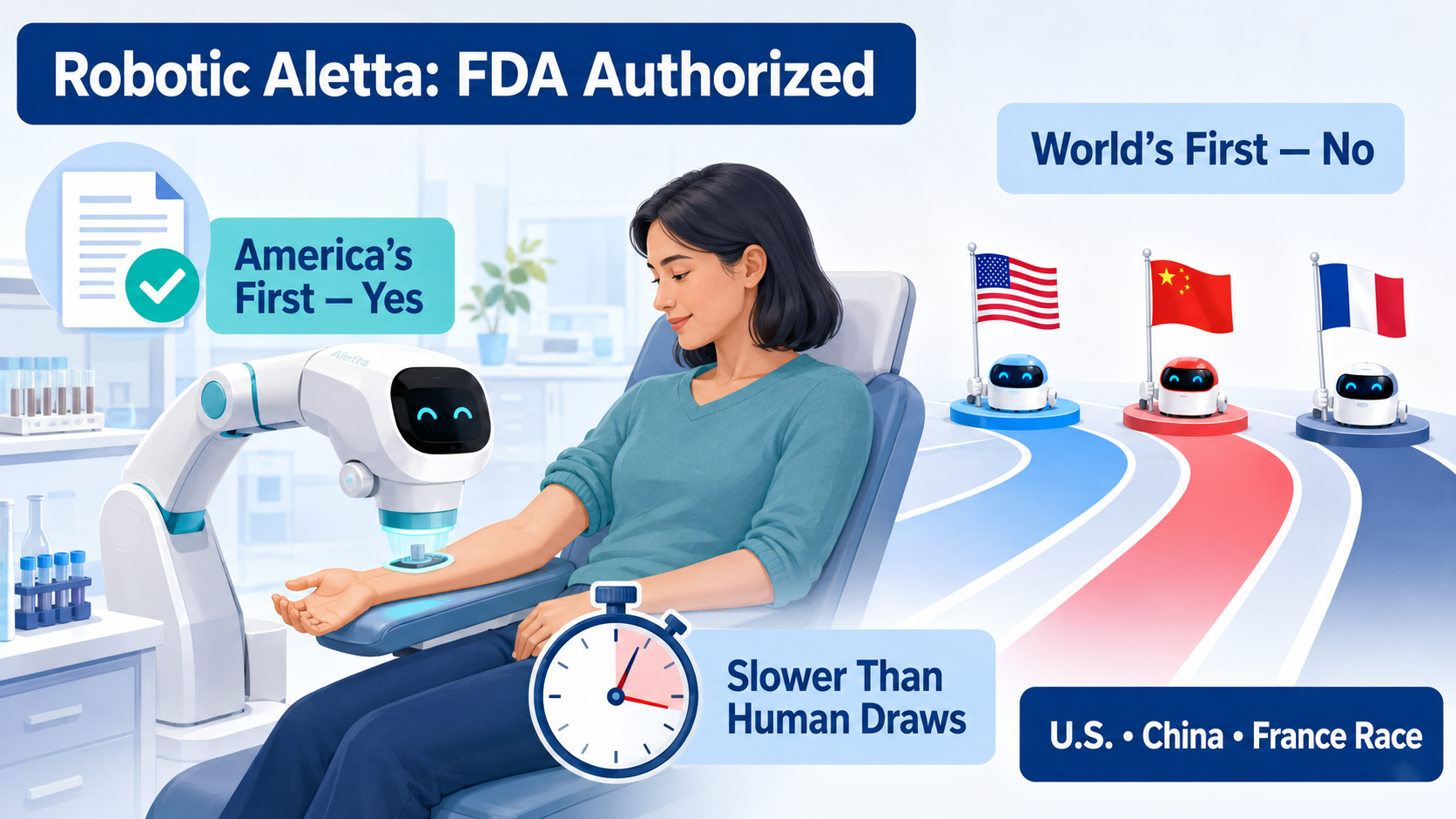
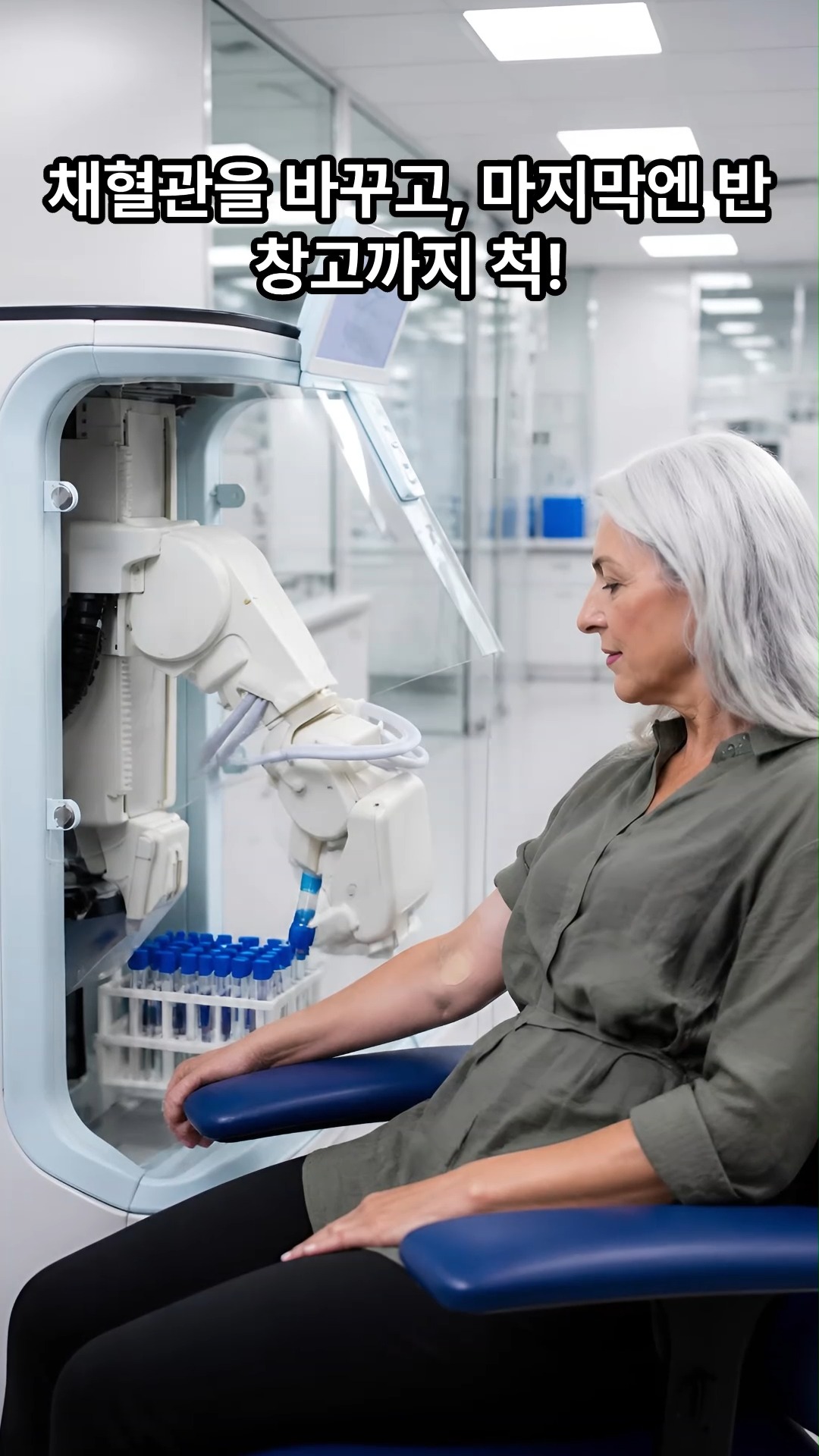
채혈 로봇이 등장했습니다. FDA는 8월 19일 알레타(Aletta)라는, '피 뽑는 로봇'을 승인하면서 "숙련된 채혈 전문가가 부족해서 환자들이 치료를 늦게 받는 현상을 해소하는 데에 도움이 될 것"이라고 평가했습니다. 그런데 로봇 3대당 채혈 전문가 1명이 필요하다니, 인력난을 실제로 얼마나 덜 수 있을지는 미지수입니다. 더군다나 현재로선 채혈 시간이 간호사의 3배 이상 걸립니다.
#채혈 #혈액채취 #로봇 #알레타 #비테스트로 #의료기기 #fda
https://fdajournal.com/fda-approval-a-robot-that-draws-blood-without-human-assistance-aletta-260822/
웹사이트: https://fdajournal.com (FDA JOURNAL)
*Dae Ho PARK, ceo@fdajournal.com, 82-10-5797-3580
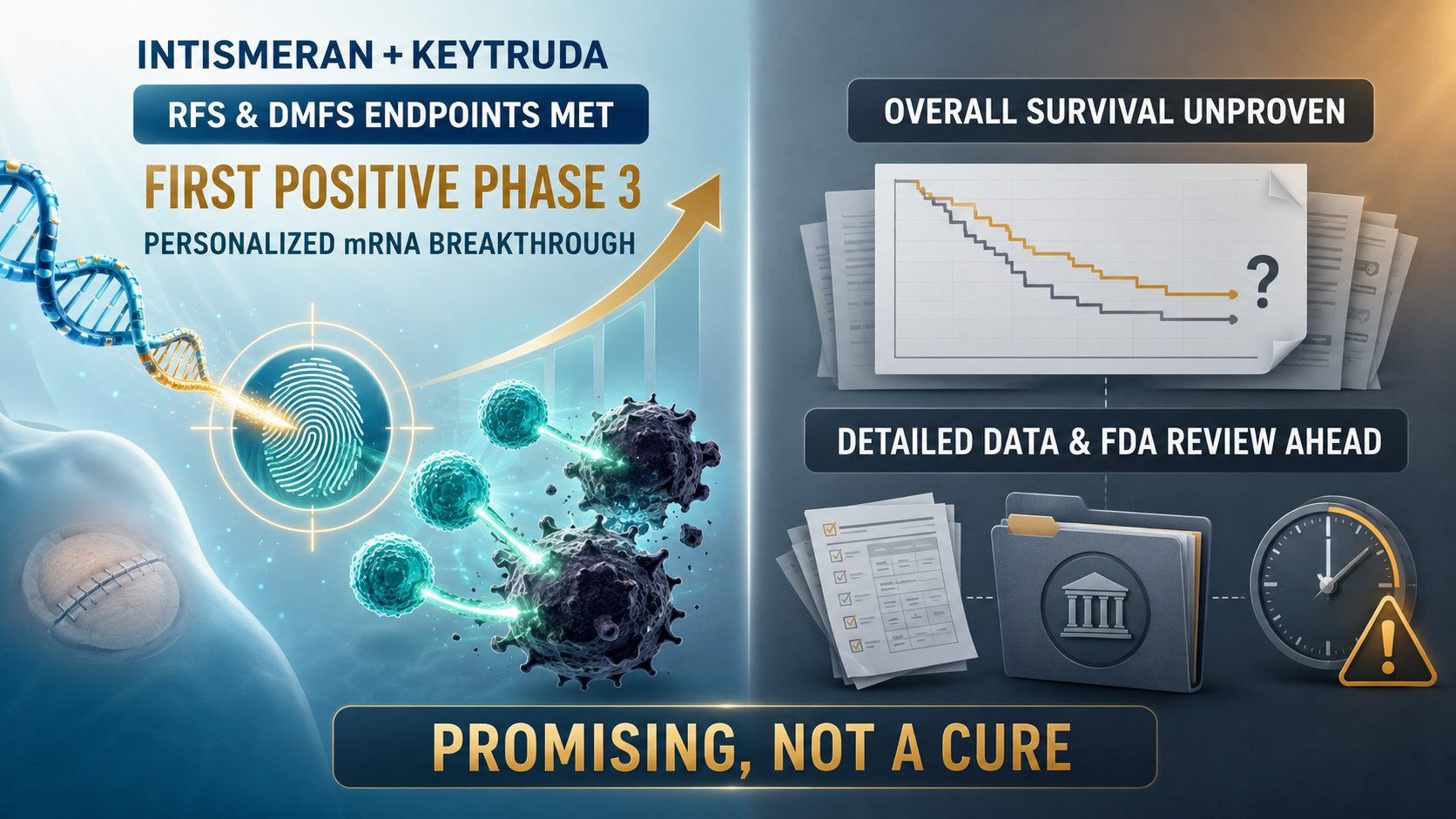
개인의 암 돌연 변이를 분석해 전용 치료제를 만든다는 구상은 오래전부터 연구됐지만, 맞춤형 자체가 어렵고, 재발을 줄여야 하는 데다가 임상 시험도 쉽지 않았습니다. 그런데, 모더나와 머크가 이른바 '개인 맞춤형 암 백신'의 임상 시험에서 긍정적인 결과를 얻었다고 해서, 온 장안이 떠들썩합니다. 남은 과제는 뭘까요? 실현 가능한가요?
#암백신 #맞춤치료 #맞춤형백신 #개별치료 #흑색종 #피부암 #모더나 #머크 #mRNA
https://fdajournal.com/moderna-merck-mrna-intismeran-melanoma-3-260821/
웹사이트: https://fdajournal.com
FDA JOURNAL
*Dae Ho PARK, ceo@fdajournal.com, 82(Korea)-10-5797-3580
트럼프가 FDA 청장 후보를 3개월만에 지명했습니다. 37살 여성 보좌관입니다. 파격적입니다. 트럼프는 FDA 외부의 저명한 의학자나 제약/식품 규제 전문가보다 자신의 정책 방향을 잘 이해하고 백악관과 직접 소통할 수 있는 내부 참모를 택한 것으로 해석됩니다. FDA의 독립적인 과학 판단보다 백악관 보건 정책과의 일관성을 중시한 인선이라는 분석이 나옵니다.
#FDA #트럼프 #청장 #국장 #상원청문회 #인준
https://fdajournal.com/trump-fda-30-heidi-overton-senate-confirmation-expected-to-face-difficulties-260820/
웹사이트: https://fdajournal.com
FDA JOURNAL — Where the Curious Come to Rest
*Dae Ho PARK, ceo@fdajournal.com, 82(Korea)-10-5797-3580
뒤센 근이영양증(Duchenne Muscular Dystrophy)은 주로 남자 아이에게 나타나는 희귀 유전 질환입니다. 몸의 근육이 천천히 약해지는데, 심장이나 호흡 관련 근육이 약해지면 심각한 상태로 치닫습니다. 심장 근육을 치료하는 세포 치료제를 카프리코(Capricor)가 개발했는데, FDA로부터 1차 승인 거절을 당했고 이번엔 자문위로부터 부정적인 결과를 받았네요. 그만큼 희귀 질환 약을 만들기는 어렵습니다. 이 회사는 약의 용도를 줄여서 다시 신청한답니다. 어떻게 될까요?
#희귀질환 #근육 #뒤센 #근이영양 #근위축 #심근병증 #FDA #카프리코
https://fdajournal.com/capricor-ceo-decision-made-to-resubmit-the-application-for-deramiocel-fda-260816/
어린이가 맞아야 하는 백신의 종류를 미국 정부가 줄인 게 올 1월, 이에 대해 연방 법원이 줄이지 못하도록 판결한 게 3월입니다. 그래서 미국 정부와 의사들 사이의 백신 전쟁은 이후 최근까지 5개월 동안 수면 밑에 있었습니다. 백신 축소 방침에 대한 여론이 부정적이라는 사실을 감지한 트럼프가 백신 변경을 추진하지 않을 것이라는 분석이 나돌기도 했습니다. 그런데 트럼프가 8월10일 행정 명령에 전격 서명했습니다. 중간 선거를 3개월 앞둔 시점입니다. 이 조치가 선거에 도움이 될까요?
#백신 #백신전쟁 #백신싸움 #접종일정 #백신권고안 #어린이 #중간선거
https://fdajournal.com/the-us-vaccine-war-rekindled-trumps-conviction-or-midterm-election-strategy-260816/
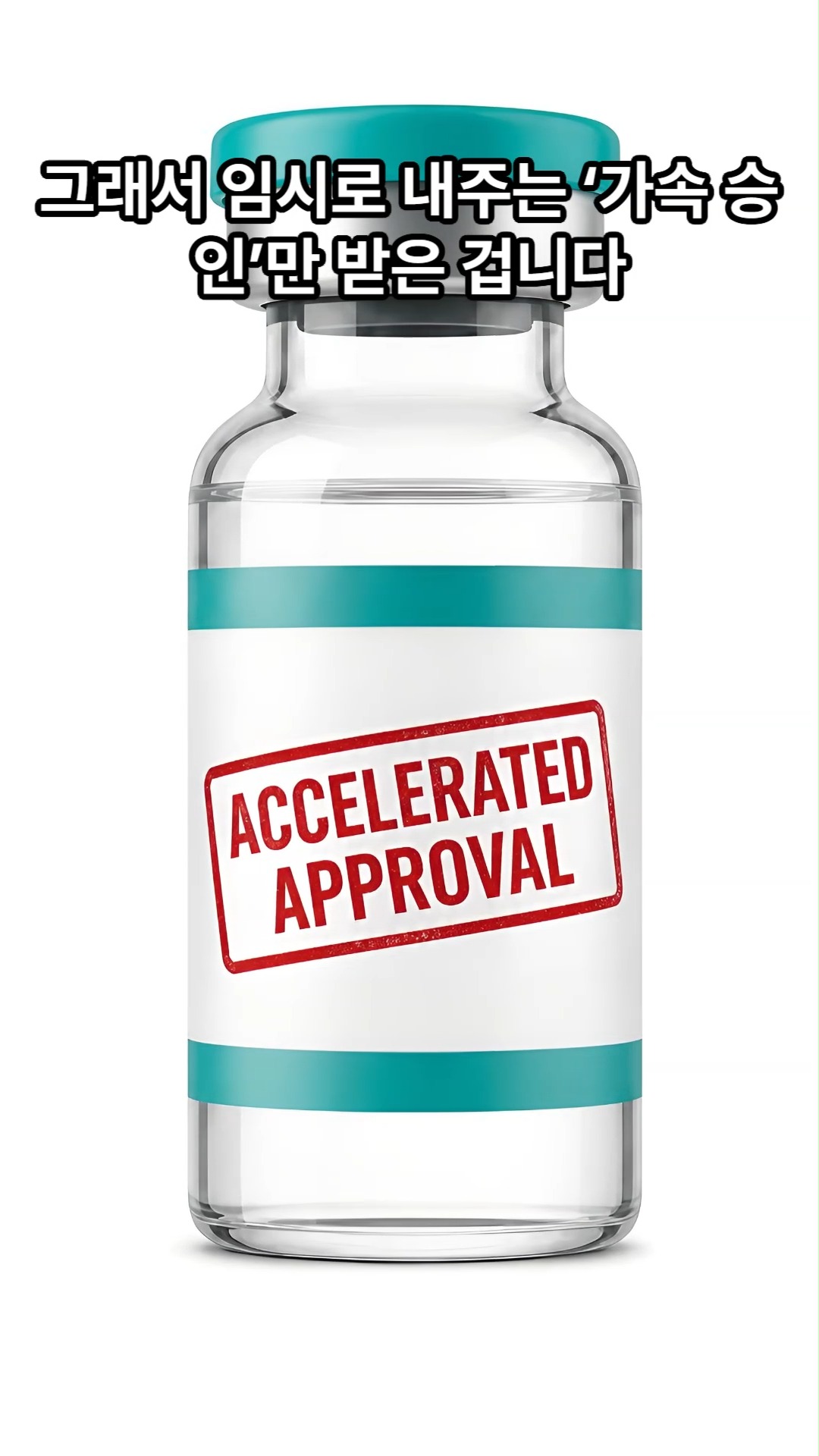
FDA가 셀모드(CELMoD)라는 기술을 8월 13일 처음 승인했습니다. 암세포에게 꼭 필요한 단백질을 찾아서, 세포 자체의 폐기 장치로 없애 버리는 한편, 면역 공격도 강화하는 차세대 방식입니다. 기존의 약이 잘 듣지 않는 환자에게 새로운 선택지가 생긴 것입니다. 첫 승인은 골수종 치료제 '젠벡서스'가 받았고 회사는 브리스톨마이어스스큅(BMS)입니다.
#FDA #골수종 #단백질 #표적치료 #항암 #젠벡서스 #BMS #브리스톨마이어스스큅
https://fdajournal.com/fda-bms-multiple-myeloma-zenbexus-accelerated-approval-a-method-of-detonating-specific-proteins-inside-cancer-cells-260814/

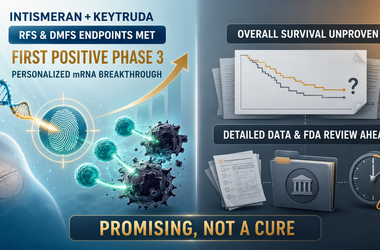 모더나(Moderna)와 머크(Merck), 맞춤형 mRNA 암 치료제 ‘인티스메란(intismeran)’의 흑색종 3상 임상 시험 성과 발표… 그러나 ‘생존 기간 연장’ 확인되지 않았고 제품화엔 수 년 걸려(However, ‘extended survival period’ was not confirmed, and commercialization will take several years)… 개인 맞춤형 치료의 길은 열렸지만 낙관은 금물 2026-08-21
 다시 불붙은 미국의 ‘백신 전쟁’…트럼프의 소신인가, 중간 선거 전략인가(The U.S. ‘Vaccine War’ Rekindled… Trump’s Conviction or Midterm Election Strategy?) 2026-08-16
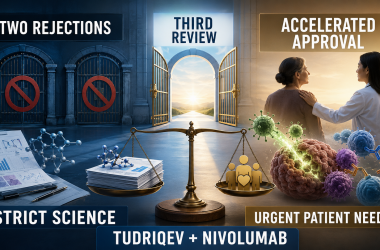 두 번 거절한 FDA, 세 번째에는 왜 승인했나…레플리뮨(Replimune)의 흑색종(Melanoma) 치료제 ‘투드리케브’(Tudriqev)가 던진 질문과 의미… “‘엄격한 과학적 기준’과 ‘환자의 절박 요구’를 어떻게 조화시켜야 하나”(How should ‘strict scientific standards’ and ‘patients’ urgent needs’ be harmonized?) 2026-08-07